PhD Research:A.I & Music
Research
My research is practice-as-research: I treat tools like Suno as a changing studio environment inside a Logic workflow, and I log what actually happens over time. That matters because these platforms evolve constantly. Interfaces change, models update, features appear, guardrails shift, and the definition of a “good output” moves with them. The research object isn’t stable, so the only way to study it properly is to stay inside the making and keep a record of the decision chain: prompts, settings, iterations, exports and stems, edits, re-writes, verification steps, and the points where I accept, refuse, or rebuild.
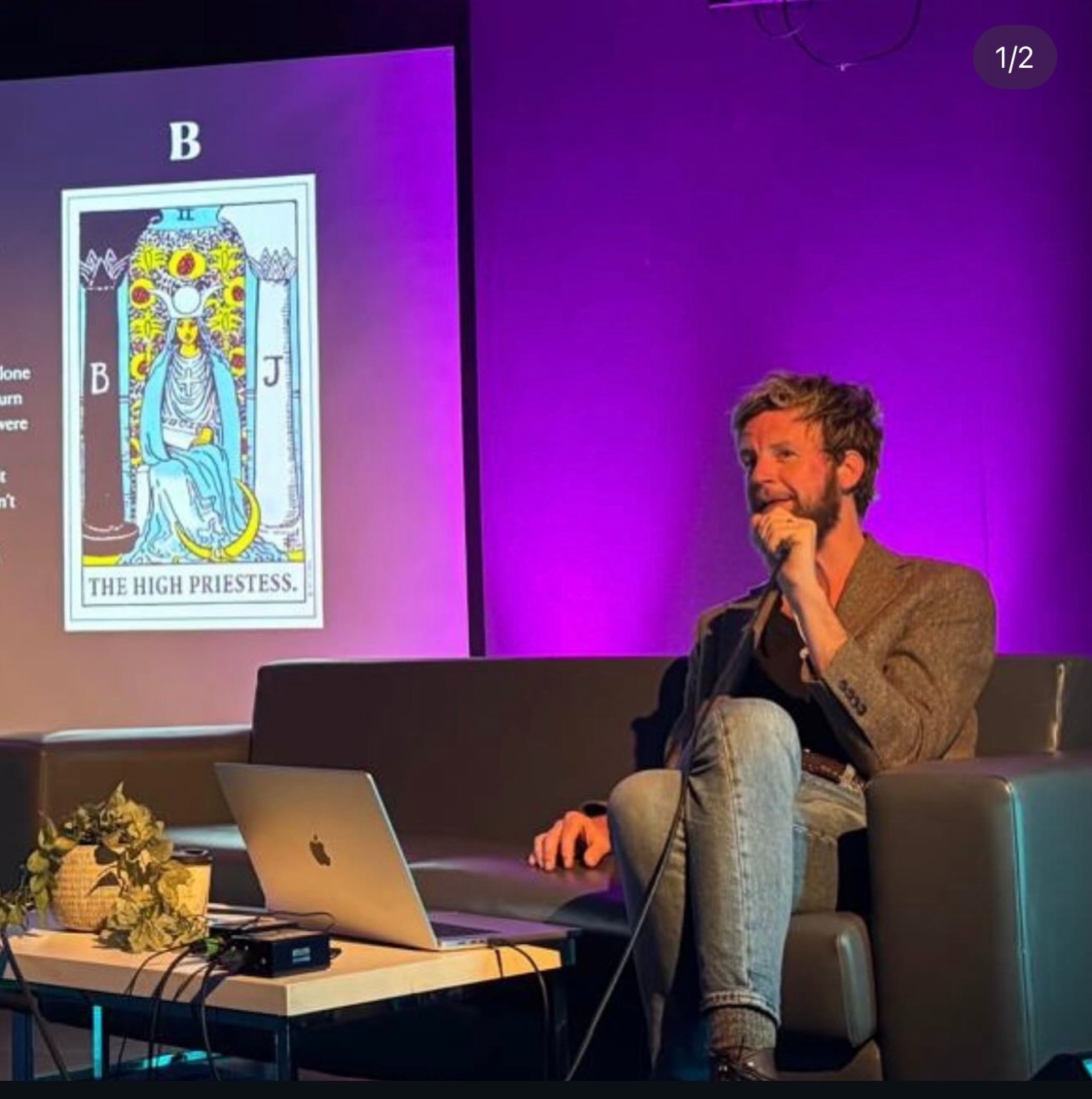
To keep the work comparable across a full body of music, I’m using the Major Arcana as a constraint system: twenty-two stable archetypal prompts that can be operationalised as compositional briefs and run through the same toolchain. I’m not asking anyone to believe in tarot. I’m using it because it’s a standardised symbolic system that forces repeatable conditions.
It also fits the cultural moment: new technologies have always attracted theological and occult language, and AI is saturated in it right now. We talk about “magic,” “summoning,” “oracles,” “alignment,” even “sparkles” as a default visual shorthand. The result is that generative systems don’t just produce sounds; they produce meanings people are tempted to read as if they came from somewhere intentional. Tarot gives me a disciplined way to test that temptation and to trace where agency actually sits: in the model’s defaults, in the interface, in the platform constraints, and in my own decisions.
The core question running through the project is simple: how do commercially available AI music systems mediate agency, voice, and authorship when a song is made with the platform in the room? The work so far has already surfaced repeatable issues that only become visible in the studio chain: semantic leakage in “no-lyrics” vocals and how to verify it, hybrid timbral artefacts (polysonic convergence) that appear only when stems are isolated, and voice-as-proxy problems where “my voice” becomes a deployable artefact that can drift from embodied intent.
Selected talks, panels, and research activity
Connecting Methods: International Perspectives on Musicological and Artistic-Performative Research, Conservatorio di Cagliari (Cagliari, Sardinia)
CERN Artists and Science Outreach Programme (advisor; showcases offered in 2026)
The Ivors Academy AI / Music Summit (advisor)
Scottish AI Alliance Summit (participant)
British Forum for Ethnomusicology, University of Cambridge (speaker/presenter)
UK Music MAP panel, Sonic Herts / University of Hertfordshire (panelist/guest speaker)
UK Music MAP panel, London College of Contemporary Music (panelist/speaker)
Networks and affiliations
Alan Turing Institute AI & Arts Group (including AI & Arts Commons meetings)
HUMAIN (Humanities–AI Network) seminars
UK MUSIC